Smart business spending solution

Smart business spending solution

Smart business spending solution

How Digital Transformation Reduced Manual Financial Work by 75%

How Digital Transformation Reduced Manual Financial Work by 75%

How Digital Transformation Reduced Manual Financial Work by 75%

TrustBill is a B2B SaaS expense tool for SMEs, combining a simple app for employees to log expenses and a live dashboard for admins to track and manage company spending in real time.

TrustBill is a B2B SaaS expense tool for SMEs, combining a simple app for employees to log expenses and a live dashboard for admins to track and manage company spending in real time.

TrustBill is a B2B SaaS expense tool for SMEs, combining a simple app for employees to log expenses and a live dashboard for admins to track and manage company spending in real time.

In partnership with:

My role

My role

Product designer & manager

Timeline

Timeline

8 Months (4/2021)

Team

Team

12

The story behind

The story behind

The Spark That Started It All

The Spark That Started It All

How did it start?

How did it start?

How did it start?

I joined TrustBill on October 1, 2020 as a junior designer, helping turn the founder’s own expense-tracking pain into an early product vision. The goal was simple but messy: give business owners visibility into spending without chasing teams, digging through spreadsheets, or relying on stacks of paper.

I joined TrustBill on October 1, 2020 as a junior designer, helping turn the founder’s own expense-tracking pain into an early product vision. The goal was simple but messy: give business owners visibility into spending without chasing teams, digging through spreadsheets, or relying on stacks of paper.

How did it started?
Tarbeeta?

Tarbeeta?

Tarbeeta?

Tarbeeta?

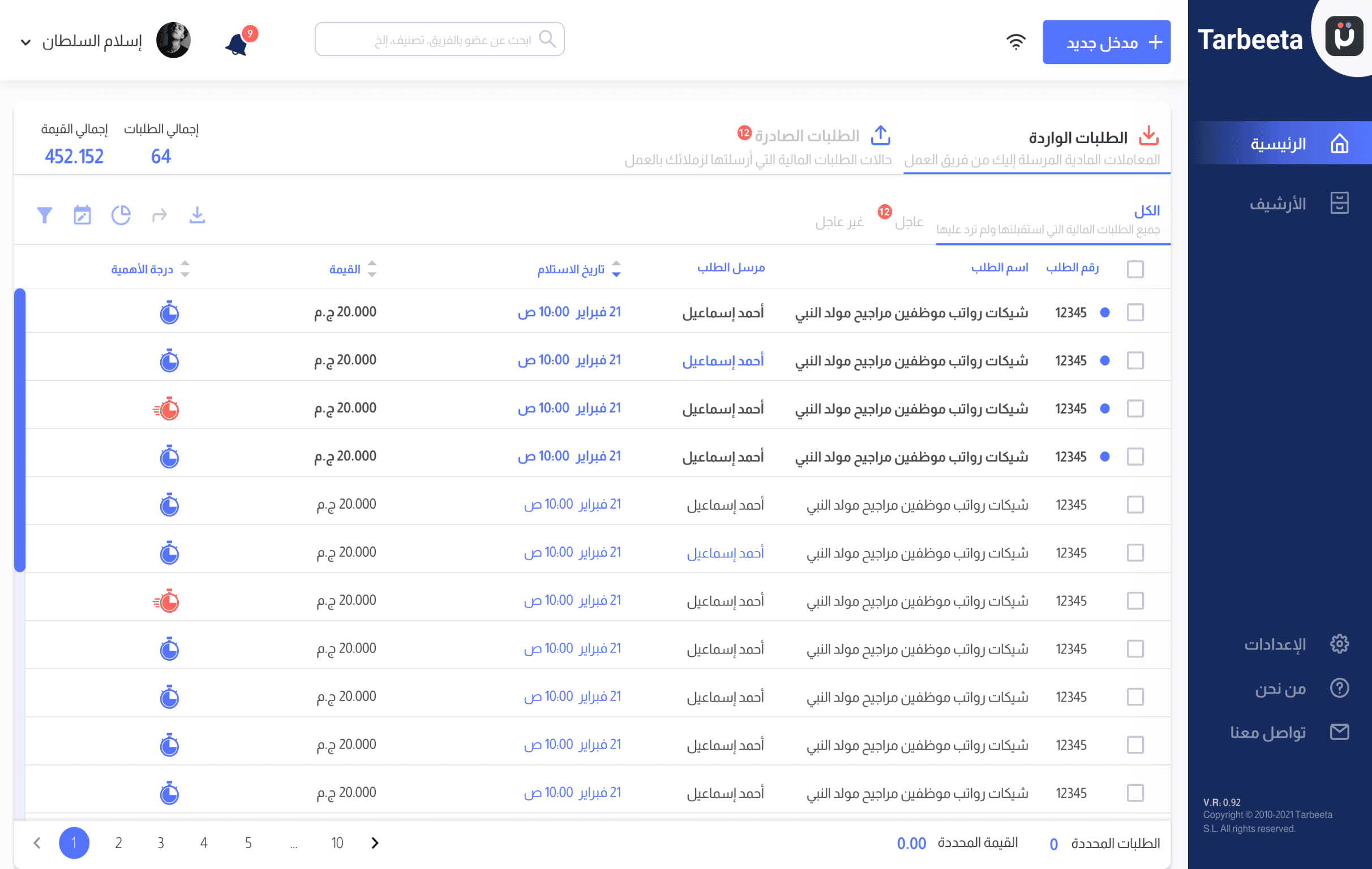
At first, we called it Tarbeeta—an Arabic name that reflects the idea of “linking.” The name captured our vision: a product that connects financial stakeholders through a single source of financial truth. Alongside my friend and product manager, Osama Bilal, and a few brilliant engineers, Ahmed, Abdelbaset, Ahmed and Shawky, plus Farouk, our founder, we began drafting the first version of Tarbeeta. Back then, it was just a simple expense recording tool.

At first, we called it Tarbeeta—an Arabic name that reflects the idea of “linking.” The name captured our vision: a product that connects financial stakeholders through a single source of financial truth. Alongside my friend and product manager, Osama Bilal, and a few brilliant engineers, Ahmed, Abdelbaset, Ahmed and Shawky, plus Farouk, our founder, we began drafting the first version of Tarbeeta. Back then, it was just a simple expense recording tool.

Project summary

Project summary

A focused look at the problem, process, solution, and results.

A focused look at the problem, process, solution, and results.

Business Problem

Business Problem

Business Problem

SMBs were managing expenses through scattered tools, manual handoffs, and records that were hard to trust. CEOs needed visibility, finance teams needed control, and employees needed a faster way to submit expenses without creating more follow-up work. The product challenge was to reduce operational friction without making the system feel heavy.

Our solution

Our solution

Our solution

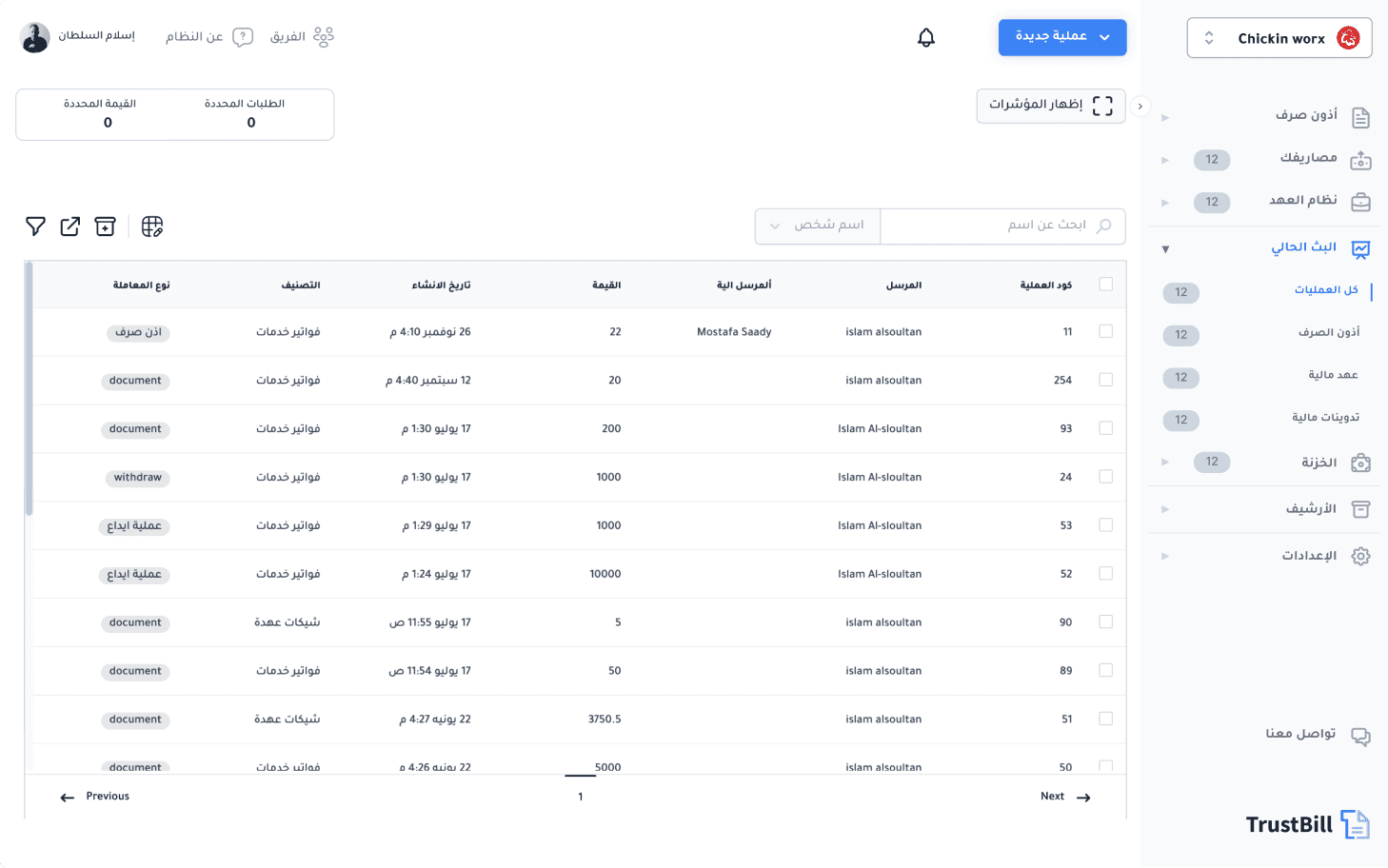
We designed a simple, minimal mobile app that lets employees log their expenses on the go—right when they happen. Each entry syncs instantly to the cloud and connects with a powerful admin dashboard we built alongside it.
On the admin side, finance teams get full visibility and control. They can track every business expense in real-time, filter by date, employee, category, amount, source, or reason—everything they need, all in one place, and without the usual hassle.

Workflow Process

Workflow Process

Workflow Process

The process followed the workflow, not a fixed design ritual. We started with a scrappy Design → Test → Iterate → Develop loop, then used internal finance users to validate the earliest assumptions. Once the MVP was stable, we added interviews and product signals to understand approval bottlenecks, repeated manual work, and where each role needed more decision clarity.

Current Workflow Reality

Current Workflow Reality

Current Workflow Reality

Most SMBs still run their finances using a mix of Excel, Google Sheets, pen and paper, and basic accounting software—tools that were never meant to work together. While these familiar solutions may have gotten them off the ground, they’re now a patchwork of manual tasks, disconnected data, and limited automation. This setup slows down collaboration, creates blind spots in financial visibility, and makes it harder for teams to act quickly or strategically when it matters most.

Design Challenge

Design Challenge

Design Challenge

The core challenge was designing a smooth, intuitive experience for non-tech-savvy users, while also building a feature set that could serve both ends of the spectrum: CEOs who just want a quick, high-level financial snapshot, and finance teams who need deep control and detail.
But if I’m being real, the biggest push came from the personal side. I was still a junior designer, working solo, and was suddenly responsible for designing a full-on financial system. No backup, no safety net. I had to connect every dot, close every logic gap, and make sure what I was building wasn’t just usable—but genuinely valuable. And I had to do it all while making the experience feel effortless for the people using it.

Workflow Value

Workflow Value

Workflow Value

Real-time tracking

Reduced workload

Easier audits

Clearer insights

Boosted productivity

Better error detection

Product Impact

Product Impact

Product Impact

98.9%

98.9%

98.9%

Less time to log expenses

Less time to log expenses

Less time to log expenses

75%

75%

75%

Less manual finance work

Less manual finance work

Less manual finance work

80%

80%

80%

Fewer errors and fraudulent entries

Fewer errors and fraudulent entries

Fewer errors and fraudulent entries

PS: These numbers are hypothetical & approximate based on studies, assumptions, and user reviews before and after the alfa release.
Tools & Practices

Blending design and product management, I led with vision and strategy, gaining confidence to explore, experiment, and learn fast.

Blending design and product management, I led with vision and strategy, gaining confidence to explore, experiment, and learn fast.

Tools & Practices

Blending design and product management, I led with vision and strategy, gaining confidence to explore, experiment, and learn fast.

Tools

Tools

Over my 2+ years at TrustBill, I used a wide range of tools—many of them new to me. Tools like Adobe XD and Figma supported the design work, while Roam Research and Notion helped me capture and organize ideas. For mapping and diagrams, I relied on X-Mind and Whimsical, and when it came to research, I used Mixpanel for event tracking and Hotjar to observe user behavior through session recordings.

Roam research

Hotjar

Adobe XD

Whimsical

Jira

Notion

Mixpanel

Figma

X-Mind

Slack

Practices

Practices

The practices I followed blended design, research, and product management. On the design side, I focused on efficiency by using component-based systems and adopting a tech-friendly front-end framework to streamline execution. At the same time, I leaned on research methods like surveys, user interviews, and usability testing to ensure that every design decision was grounded in real user insights.

User interviews

Surveys

Card sorting

Persona

Usability testing

Value proposition

Backlog refinement

Sprint planning

Prioritization

Tools

Over my 2+ years at TrustBill, I used a wide range of tools—many of them new to me. Tools like Adobe XD and Figma supported the design work, while Roam Research and Notion helped me capture and organize ideas. For mapping and diagrams, I relied on X-Mind and Whimsical, and when it came to research, I used Mixpanel for event tracking and Hotjar to observe user behavior through session recordings.

Roam research

Hotjar

Adobe XD

Whimsical

Jira

Notion

Mixpanel

Figma

X-Mind

Slack

Practices

The practices I followed blended design, research, and product management. On the design side, I focused on efficiency by using component-based systems and adopting a tech-friendly front-end framework to streamline execution. At the same time, I leaned on research methods like surveys, user interviews, and usability testing to ensure that every design decision was grounded in real user insights.

User interviews

Surveys

Card sorting

Persona

Usability testing

Value proposition

Backlog refinement

Sprint planning

Prioritization

Visuals

Visuals

Shaping TrustBill’s design from the ground up, without prior experience, just curiosity and persistence.

Shaping TrustBill’s design from the ground up, without prior experience, just curiosity and persistence.

Dashboard

Dashboard

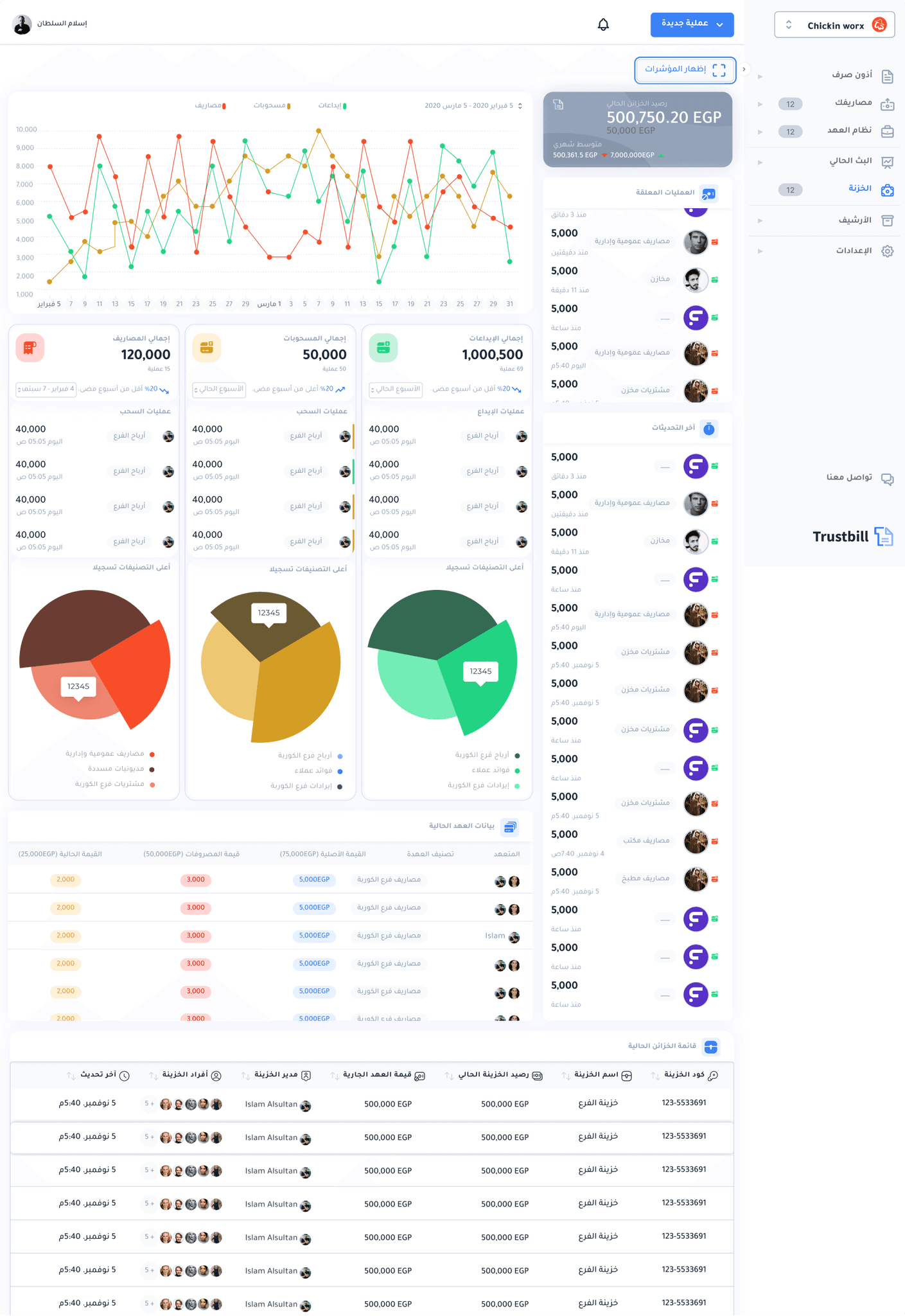
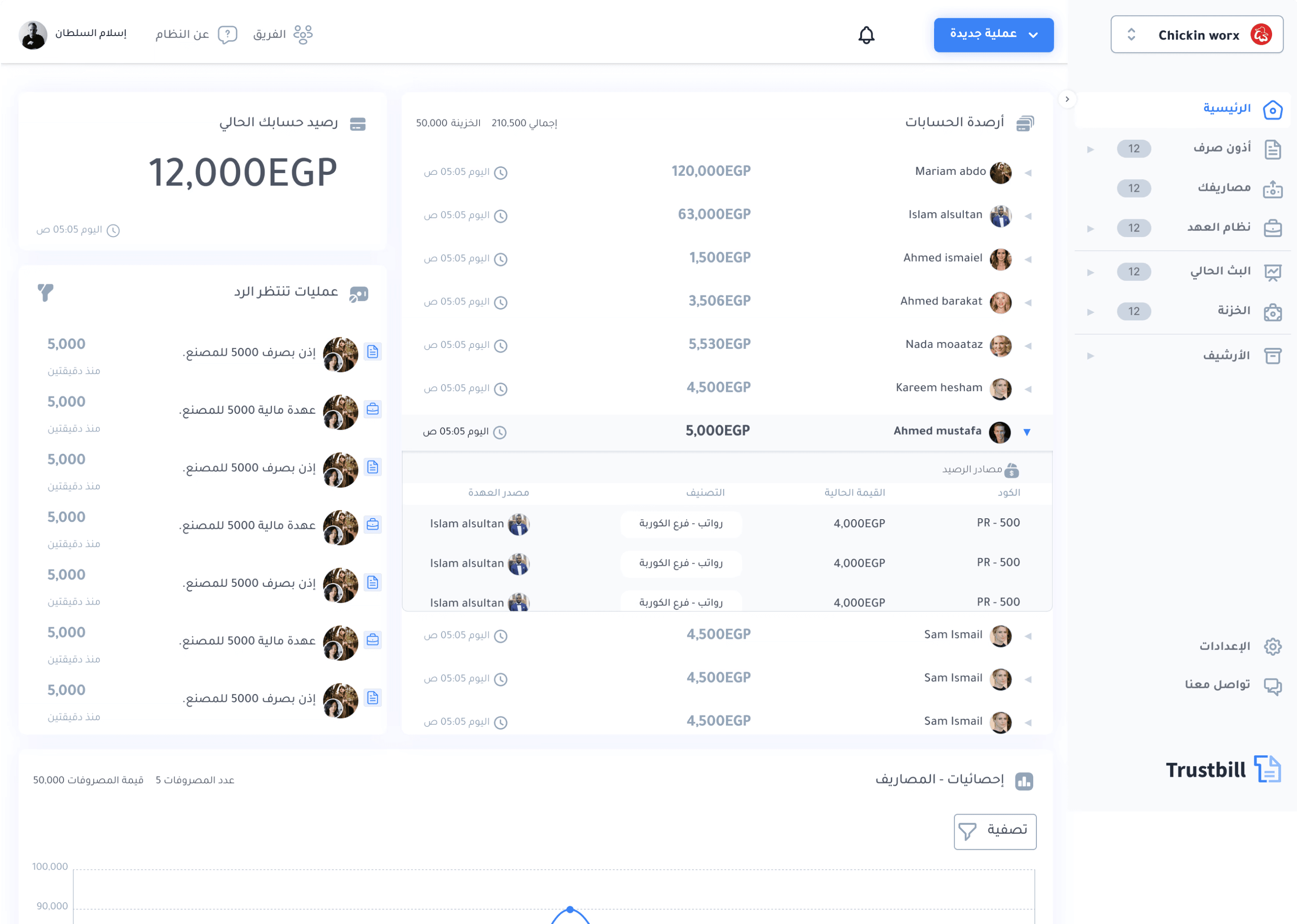
The Super Admin Dashboard gives a live overview of all company expenses, approvals, and balances—designed to surface key insights quickly and fit more data into less space.

Dashboard

Dashboard

The Super Admin Dashboard gives a live overview of all company expenses, approvals, and balances—designed to surface key insights quickly and fit more data into less space.

Dashboard
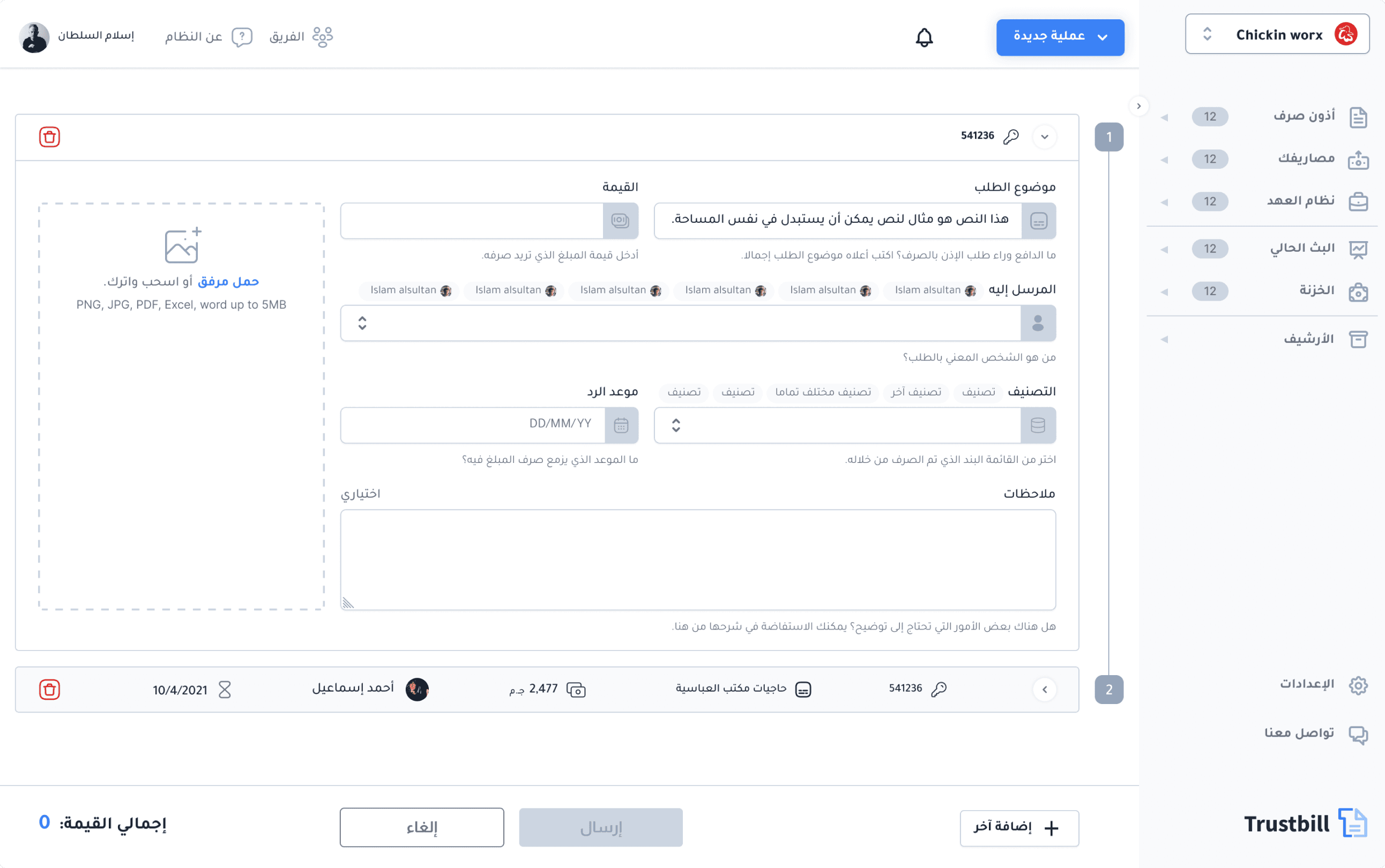
Expense request

Expense request

Expense request

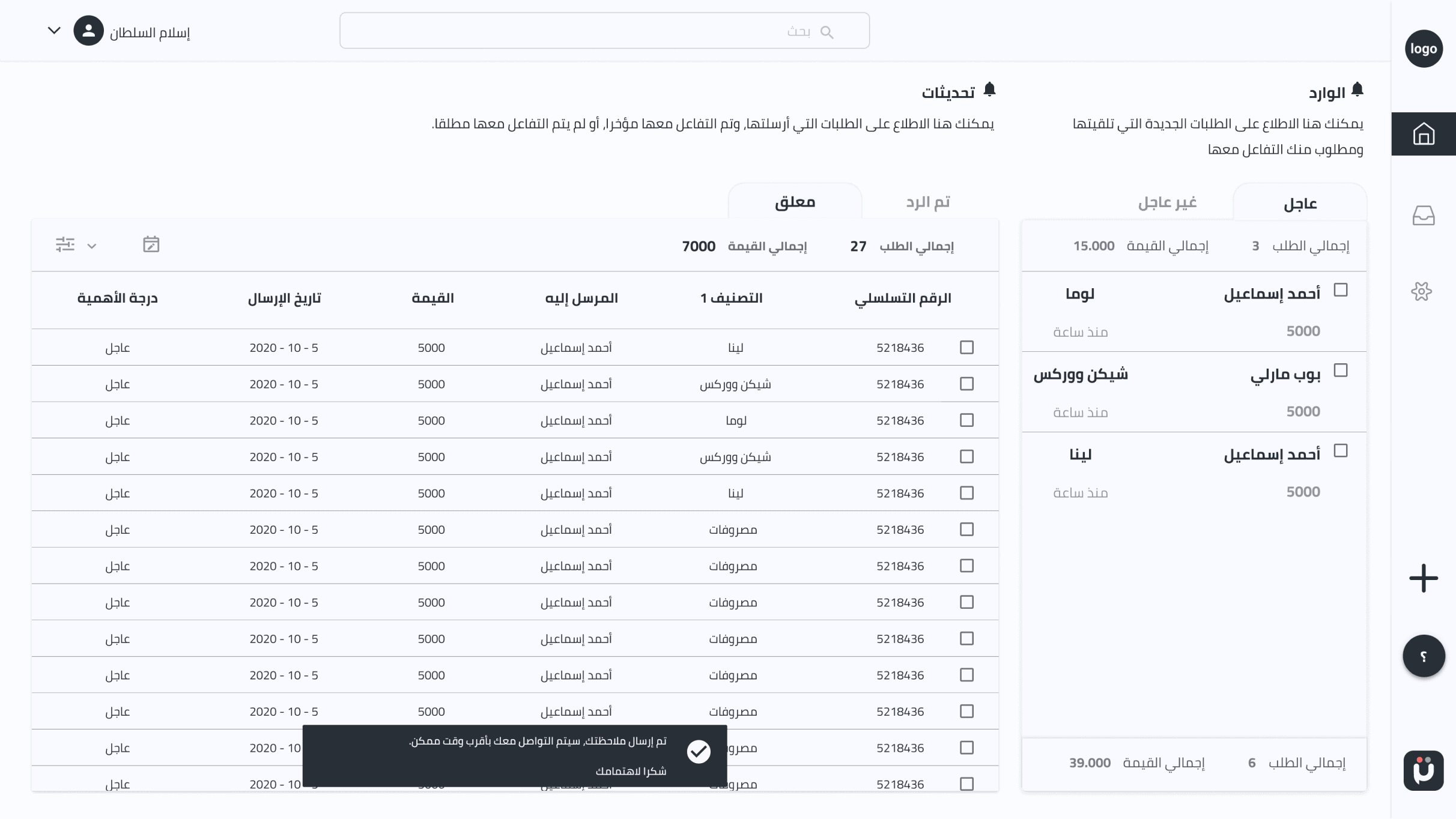
Where employees submit new expense requests that exceed a pre-defined threshold, sent directly to the financial manager for review and approval.

Expense record

Expense record

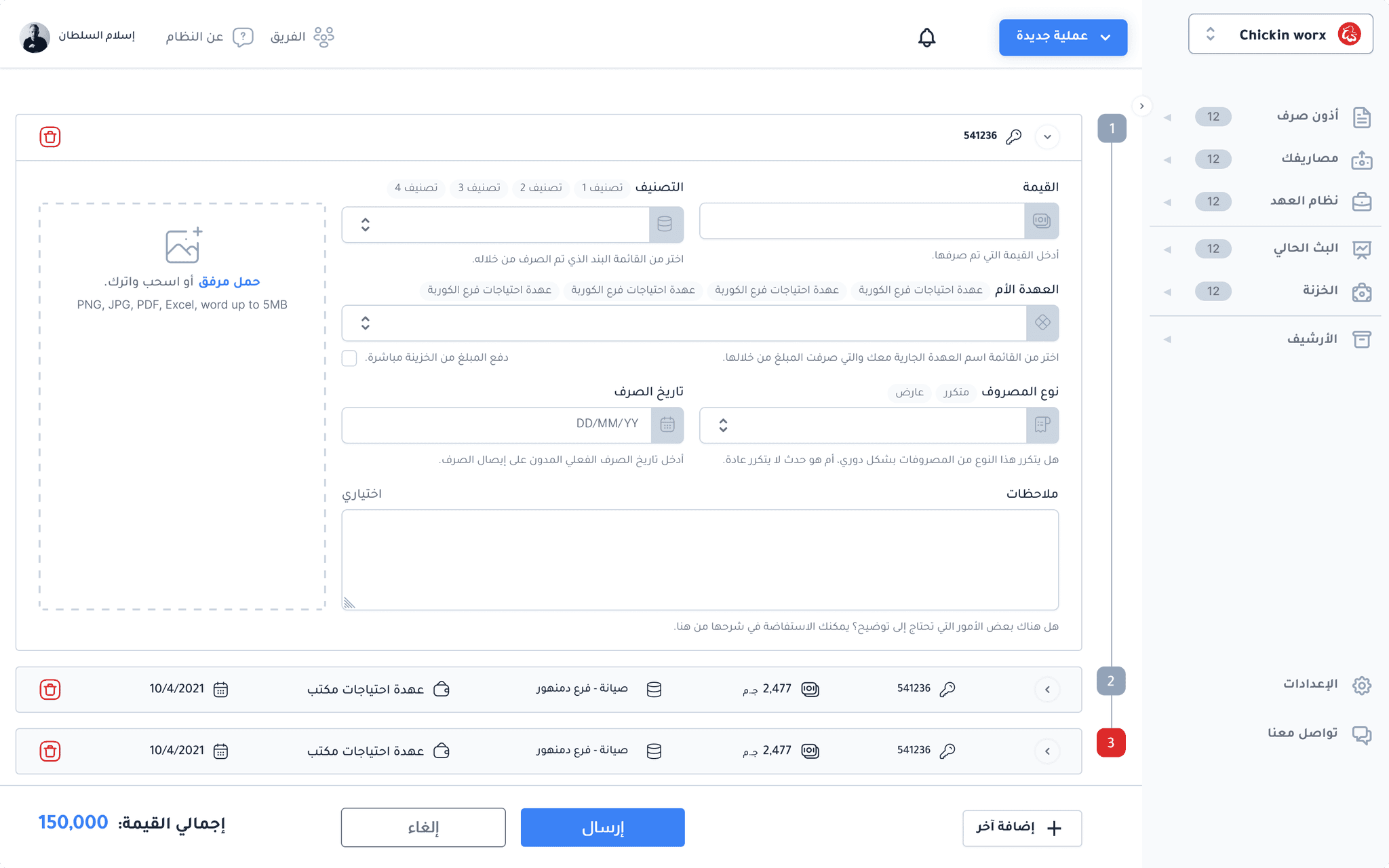
Where employees log day-to-day expenses instantly as they happen, no delays. Entries sync to the admin dashboard in real time.

Expense record
Expense request

Expense request

Where employees submit new expense requests that exceed a pre-defined threshold, sent directly to the financial manager for review and approval.

Expense record

Where employees log day-to-day expenses instantly as they happen, no delays. Entries sync to the admin dashboard in real time.

Expense record

Helicopter Overview

Helicopter Overview

Helicopter Overview

This view is built for high-level managers like CEOs and CFOs to get live visibility into company spending—showing where every penny goes, when it’s spent, how much, and by whom.
Other screens

Other screens

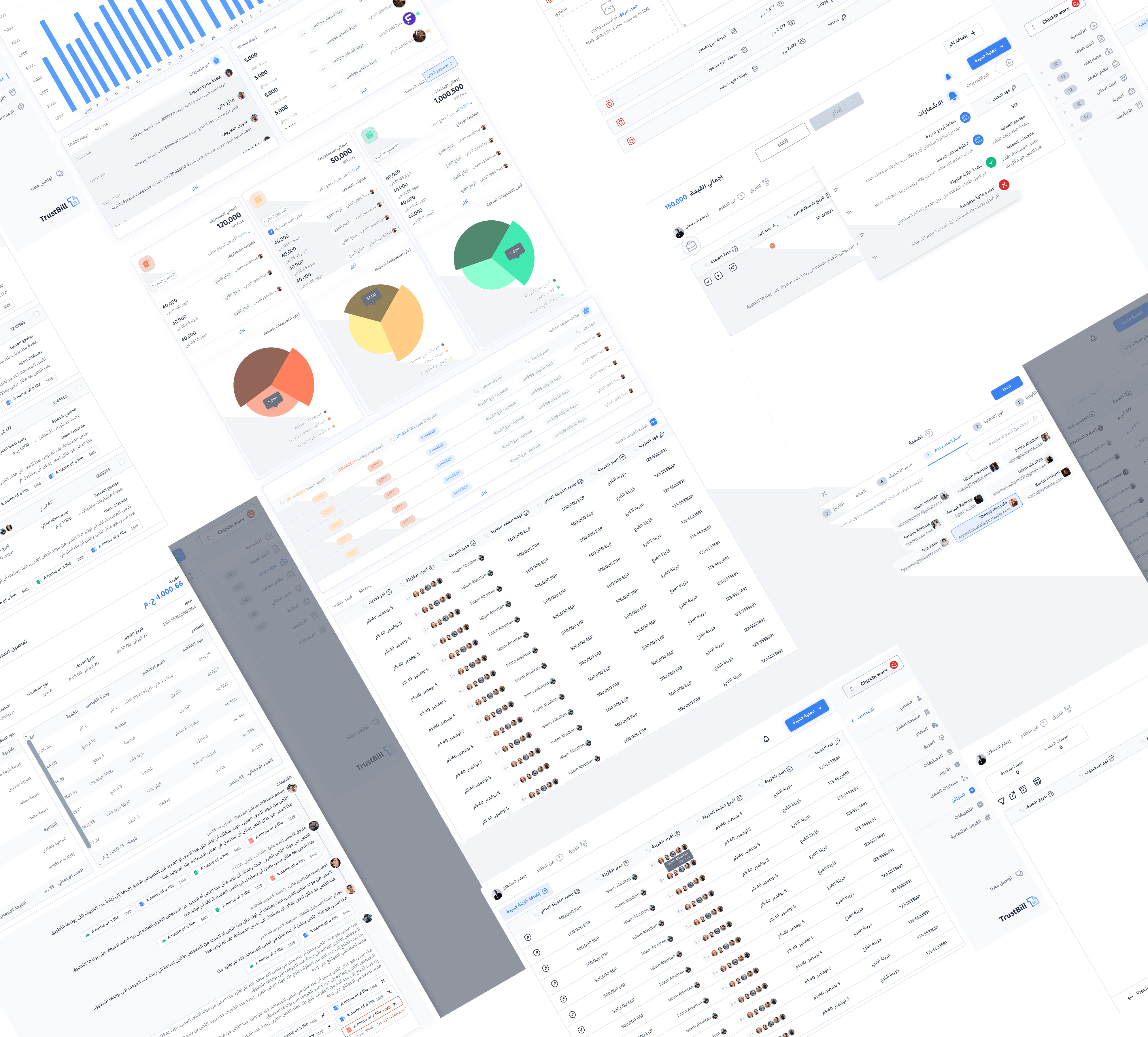
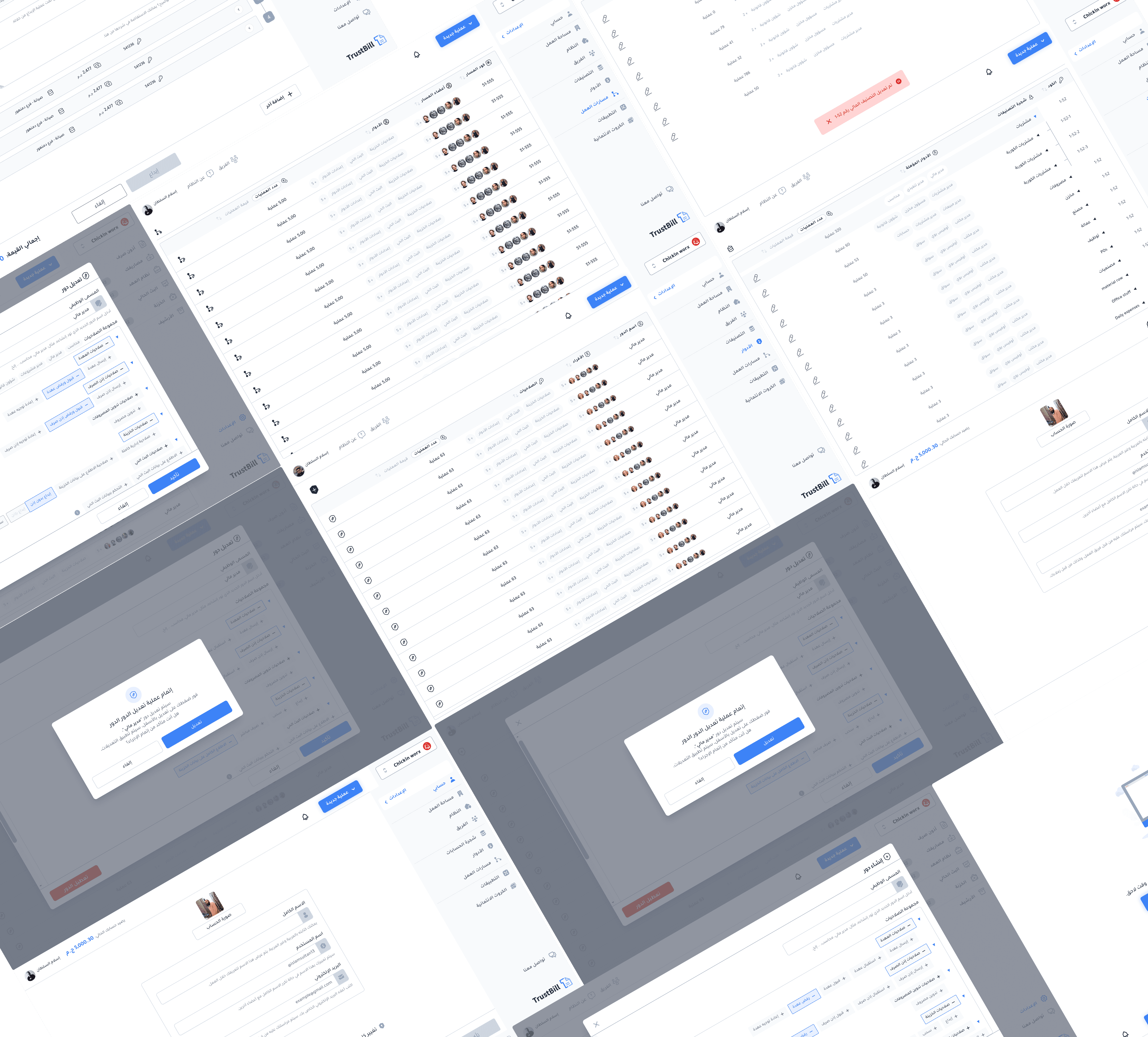
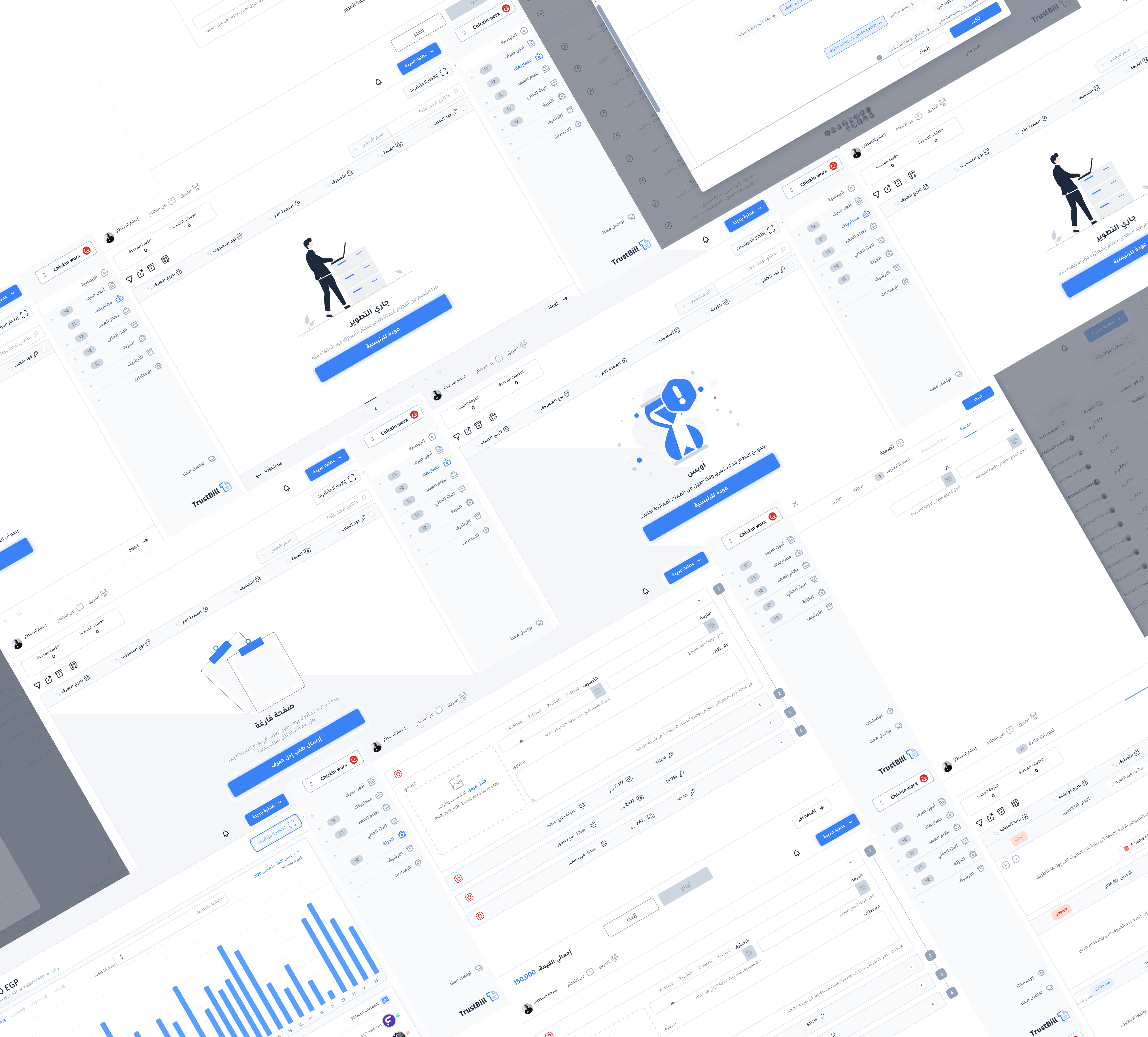
Over 300 screen calculating each and every case scenario, which considering product complicity and the views conditions for different end users.

Over 300 screen calculating each and every case scenario, which considering product complicity and the views conditions for different end users.

Other TrustBill Screens

Learnings

Learnings

Reflections, takeaways, and what I’d do differently.

Reflections, takeaways, and what I’d do differently.

What did I learn?

What did I learn?

What did I learn?

TrustBill taught me how much operational UX depends on understanding the work around the screen. Expense logging was only one part of the problem; the harder work was connecting employees, finance teams, and decision makers into a flow that reduced follow-up, made records easier to trust, and turned scattered financial activity into useful product data.

TrustBill taught me how much operational UX depends on understanding the work around the screen. Expense logging was only one part of the problem; the harder work was connecting employees, finance teams, and decision makers into a flow that reduced follow-up, made records easier to trust, and turned scattered financial activity into useful product data.

What went well?

What went well?

What went well?

The strongest part was getting a usable MVP in front of real business users early. We onboarded beta users, including Breadfast, Jackardina, and Chickin Worx, and used their operational needs to shape the product beyond assumptions. Regular team retros and close product-engineering collaboration helped us keep the workflow practical while the system was still forming.

The strongest part was getting a usable MVP in front of real business users early. We onboarded beta users, including Breadfast, Jackardina, and Chickin Worx, and used their operational needs to shape the product beyond assumptions. Regular team retros and close product-engineering collaboration helped us keep the workflow practical while the system was still forming.

What could be improved?

What could be improved?

What could be improved?

If I revisited it, I would document the approval logic and edge cases earlier, especially around custody flows, attachments, and financial evidence. I would also define clearer workflow metrics from the start: time to log an expense, approval cycle time, correction rate, and how often finance teams needed to follow up manually.

If I revisited it, I would document the approval logic and edge cases earlier, especially around custody flows, attachments, and financial evidence. I would also define clearer workflow metrics from the start: time to log an expense, approval cycle time, correction rate, and how often finance teams needed to follow up manually.

Keep Exploring

Keep Exploring

More projects, more perspective—see what else is shaping the way I design.

More projects, more perspective—see what else is shaping the way I design.

More projects, more perspective—see what else is shaping the way I design.

Let's Connect

I work with ambitious teams and founders to build digital products that are genuinely useful, and that grow with the business.

Let’s Talk!

Let's Connect

I work with ambitious teams and founders to build digital products that are genuinely useful, and that grow with the business.

Let’s Talk!